
Disclaimer: This is created only for educational and informational purposes. I am not a financial advisor, and nothing in this should be taken as financial advice or a recommendation to buy or sell any stock or security.
Trend Indicators
Bullish Setup (Upward Trend):
- Price above EMA50 and EMA200: This means that the price is currently higher than two important moving averages. The 50-period EMA (a shorter-term moving average) is showing that, in the short run, the price is trending up. The 200-period EMA (a longer-term moving average) shows that, in the longer run, the trend is also up. When both of these are in an upward position, it signals that the market is generally bullish.
- RSI above 50: The Relative Strength Index (RSI) is a momentum indicator. When RSI is above 50, it suggests that the buying momentum is stronger than selling momentum, and more people are willing to buy than sell. This is often interpreted as a signal that the market is bullish.
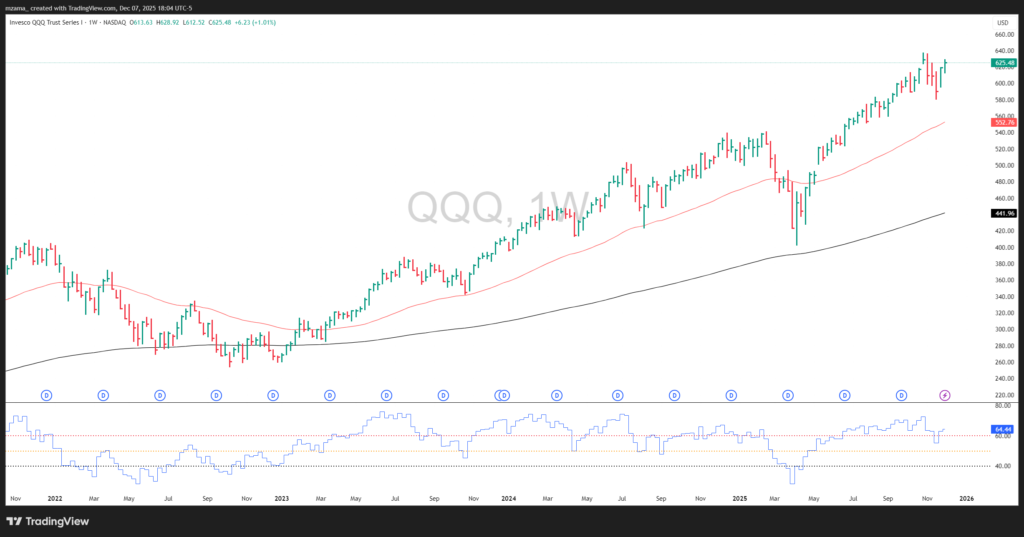
So, when price is above both EMAs and RSI is above 50, you’re in a bullish or uptrend market.
Bearish Setup (Downward Trend):
- Price below EMA50 and EMA200: If the price is below both the 50-period and 200-period moving averages, this indicates the market is generally trending down. The short-term (50) and long-term (200) trends are both pointing downward, so it’s considered a bearish market.
- RSI below 50: If the RSI drops below 50, this means selling pressure is stronger than buying pressure. It suggests the market is moving into a bearish or downtrend phase.
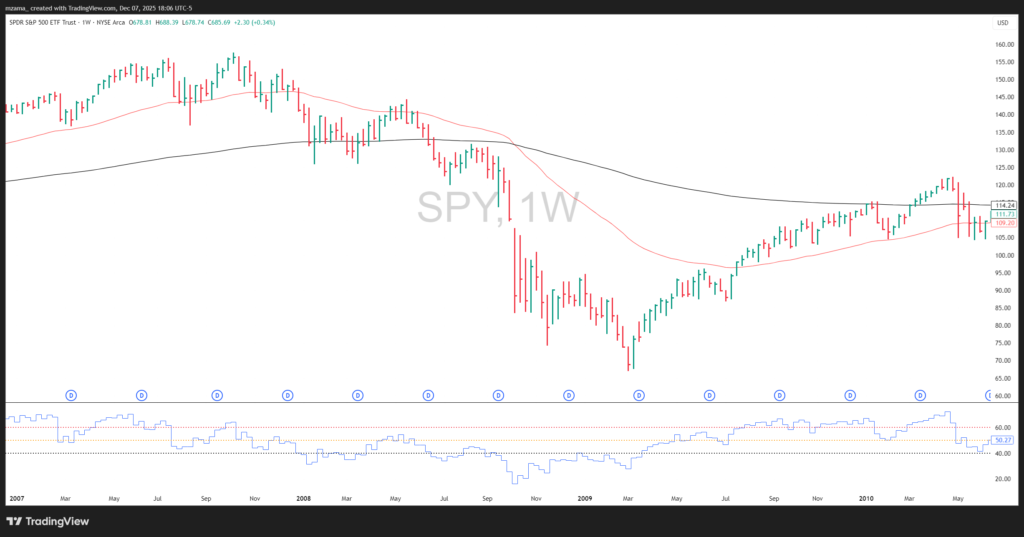
So, when price is below both EMAs and RSI is below 50, you’re in a bearish or downtrend market.
In summary:
Bearish: Price below EMA50/200 + RSI below 50
Bullish: Price above EMA50/200 + RSI above 50
Leverage/margin
When Leverage/ Margin Is Good:
- In a Strong Trend:
Leverage can be really helpful when the market is moving strongly in your favor. If you’re in a clear uptrend (or downtrend), you can use leverage to magnify your gains. - Small Positions:
Using leverage with small positions can increase your potential returns without taking on too much risk. If the market moves against you, the losses are smaller. - Short-Term Trades:
Leverage works well for short-term trades (like day trading) when you have a clear strategy and know when to exit. You don’t need to hold the position long, so the risk of big losses is lower.
When Leverage/ Margin Is Bad:
- Volatile Markets:
Leverage can make losses bigger, especially when the market is unpredictable. If prices move suddenly and the trend reverses, you can lose more than you expect. - Overleveraging:
Using too much leverage is dangerous. If the market goes against you, your position can be liquidated (forced to close), and you could lose much more than you invested. - Long-Term Trades:
Leverage isn’t great for long-term positions, as it can be expensive to hold positions (due to interest fees) and risky if the market is flat or moving slowly.
Conclusion:
Leverage can be helpful if you’re trading in a strong trend, using small positions, and making short-term trades. But it’s risky in volatile markets, if you use too much leverage, or when holding long-term positions. Always manage your risk carefully!
Leave a Reply